
DGTG logo DGTG

Future of Marketing 2026: 5 Trends for B2B Leaders

Gartner's marketing predictions for 2026, translated into a practical roadmap for founders and CMOs. See where to invest and what to fix first.
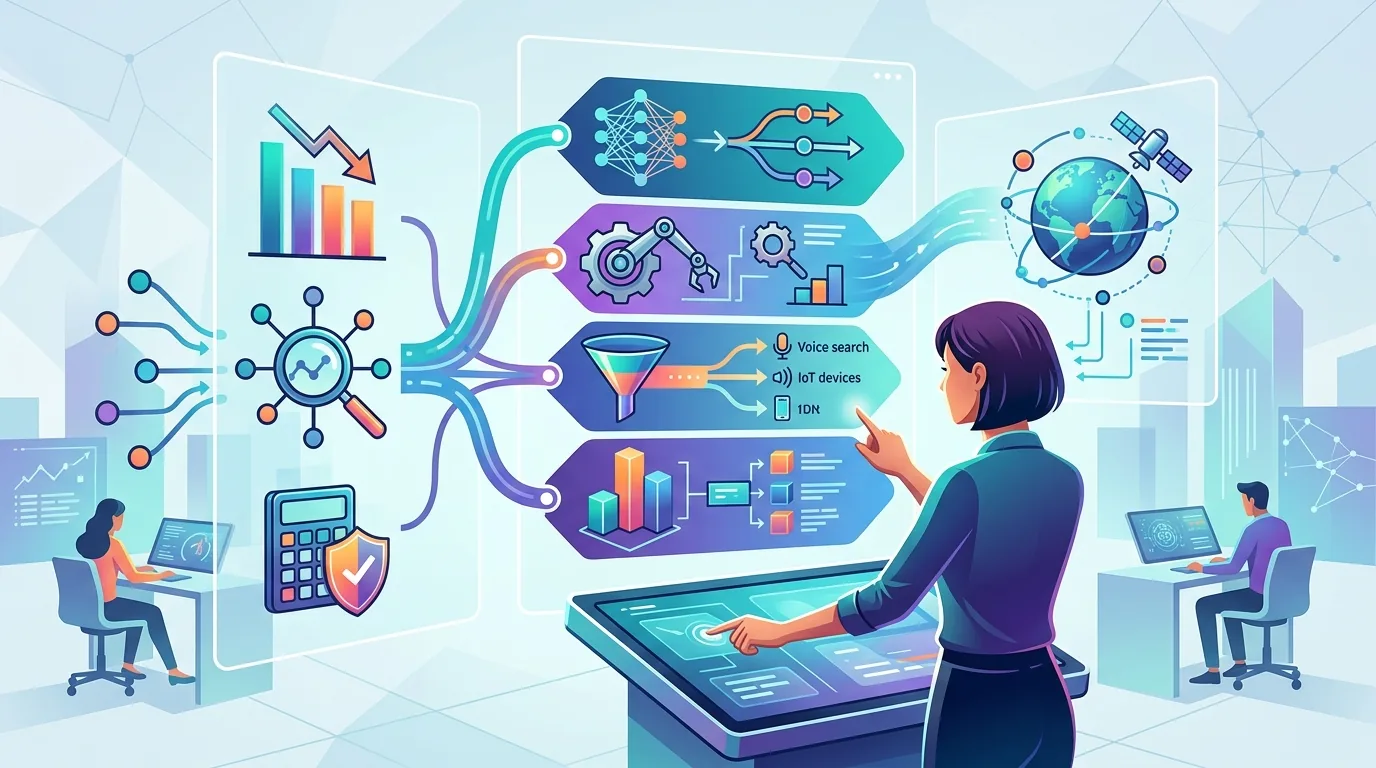
The Future of Marketing: 5 Trends and Predictions for 2026 — illustrative featured image
A B2B SaaS client came to us last quarter with a familiar problem. Their CAC had climbed 38 percent in twelve months. Paid search ROAS had slipped from 2.9 to 1.7. The CMO wanted to know whether to double down on performance channels or rebuild the whole funnel from scratch. That question is the entire marketing conversation right now. Gartner's latest [marketing predictions for 2026](/dgtg/blog/the-future-of-marketing-5-gartner-predictions-every-agency-should-heed) land in the middle of it, and they are worth reading closely if you are the person signing off on budget. The headline: the playbook that got you here will not get you to 2026. Not because the channels died, but because the math behind them changed. Here is what we think matters, what we would ignore, and where we would put money next year. ## The Five Trends, Translated for Operators Gartner's five predictions are directionally right. But predictions read like weather reports. You need to know what to wear. So let us translate each one into a decision you can actually make. ### 1. AI moves from tool to team member The shift is not that marketers use AI. It is that AI agents start owning discrete workflows: lead scoring, creative variant testing, budget reallocation across channels. Gartner frames this as autonomy creeping into execution. What this means for you: the bottleneck stops being production capacity and starts being judgment. If your team's value was "we can produce 40 ad variants a week," that value just went to zero. If your team's value is "we know which 40 variants matter and why," you are fine. ### 2. Search fragments beyond Google Zero-click results, AI overviews, and answer engines are eating the top of the funnel. For B2B, this hits hardest on informational queries, the ones that used to feed your blog-to-MQL pipeline. Concrete number worth tracking: what percentage of your organic sessions still result in a click to a second page? If that number is falling while impressions hold steady, you are being read but not visited. That is a content strategy problem, not an SEO problem. ### 3. First-party data becomes the only data Cookie deprecation has been "coming" for four years, which made everyone complacent. The real squeeze is regulatory, not technical. Consent frameworks in the EU and a patchwork of US state laws mean third-party enrichment gets thinner every quarter. The practical consequence: your CRM becomes a marketing asset, not just a sales tool. Companies that treat it that way will out-target everyone still renting audiences. ### 4. Brand and performance stop being separate budgets This one has been true for a while, but 2026 is when the accounting catches up. CFOs are asking harder questions about brand spend because the attribution story got weaker. The answer is not to defend brand with vibes. It is to connect brand metrics (unaided recall, branded search volume) to pipeline with the same rigor you apply to paid. ### 5. The agency model splits in two Gartner's read on services is blunt: agencies either become strategic partners embedded in your revenue model, or they become commodity production shops competing on price. The middle is disappearing. We see this constantly. The agencies getting squeezed are the ones selling "we will run your ads." The ones growing are selling "we will own this outcome with you." ## A Quick Reference: What Changes, What Does Not | Trend | What changes in 2026 | What stays the same | |---|---|---| | AI in workflows | Execution gets cheap, judgment gets expensive | Someone still has to own the number | | Search fragmentation | Discovery spreads across surfaces | Buyers still research before they buy | | First-party data | Consent becomes the constraint | Clean data beats big data | | Brand plus performance | Budgets get unified | Brand still drives long-term CAC down | | Agency model | Specialists win, generalists shrink | Results still beat decks | ## What We Recommend Our take, for what it is worth, is that most teams are over-indexing on the AI story and under-indexing on the data plumbing that makes AI useful. If we were running a marketing org of 5 to 50 people heading into 2026, here is where the money goes: - **Fix the CRM before you buy another AI tool.** A clean, consented first-party dataset is the prerequisite for everything else. HubSpot or Salesforce, pick one and actually maintain it. - **Hire an agency for the thing you cannot hire for.** If you need a growth marketer who understands your category, that is a hire. If you need 200 landing page variants tested in six weeks, that is a partner. Do not confuse the two. - **Rebuild your content for answer engines, not just rankings.** Structure matters more than volume now. One well-structured piece that gets cited beats ten that get scrolled past. - **Put a real number on brand.** Track branded search volume monthly. It is an imperfect proxy, but it is a proxy, which beats a feeling. - **Audit your agency contracts against outcomes.** If the contract measures deliverables, rewrite it. If the agency resists, that tells you something. The uncomfortable truth in all five Gartner predictions is the same: the work is getting harder to fake. Cheap execution plus clear judgment is the whole game. Everything else is noise. ## FAQ ### Is the future of marketing 2026 actually different from 2025, or is this just annual prediction theater? Some of it is theater. But the data and consent shift is real and compounding, and it changes what you can measure and target. That is not a trend, it is a constraint. ### Should we cut brand spend and put it into performance given weaker attribution? No. Weaker attribution is a measurement problem, not a strategy signal. Cutting brand to hit a short-term ROAS target usually raises CAC twelve to eighteen months later. Fix measurement first. ### What should a mid-size company do first with these marketing strategy trends? Audit your first-party data and your agency contracts, in that order. Both are cheap to fix and both unlock everything else on this list. ## Related on this site - [How to Choose a Digital Marketing Agency That Survives Google Algorithm Updates](/dgtg/blog/how-to-choose-a-digital-marketing-agency-that-survives-google-algorithm-updates) - [10 Martech and AI Tools That Will Transform Your 2026 Marketing Strategy](/dgtg/blog/10-martech-and-ai-tools-that-will-transform-your-2026-marketing-strategy) - [Digital Marketing Trends 2026: What Brands Must Know](/dgtg/blog/digital-marketing-trends-2026-what-brands-must-know)

Frequently asked questions

1. AI moves from tool to team member The shift is not that marketers use AI. It is that AI agents start owning discrete workflows: lead scoring, creative variant testing, budget reallocation across c

Some of it is theater. But the data and consent shift is real and compounding, and it changes what you can measure and target. That is not a trend, it is a constraint.

Should we cut brand spend and put it into performance given weaker attribution?

No. Weaker attribution is a measurement problem, not a strategy signal. Cutting brand to hit a short-term ROAS target usually raises CAC twelve to eighteen months later. Fix measurement first.

What should a mid-size company do first with these marketing strategy trends?

Audit your first-party data and your agency contracts, in that order. Both are cheap to fix and both unlock everything else on this list.