
DGTG logo DGTG

What Is Influencer Marketing? Types and How It Works

A pragmatic guide to influencer marketing in 2026: creator types, real costs in USD, a worked CAC example, and what to run in-house versus hire out.
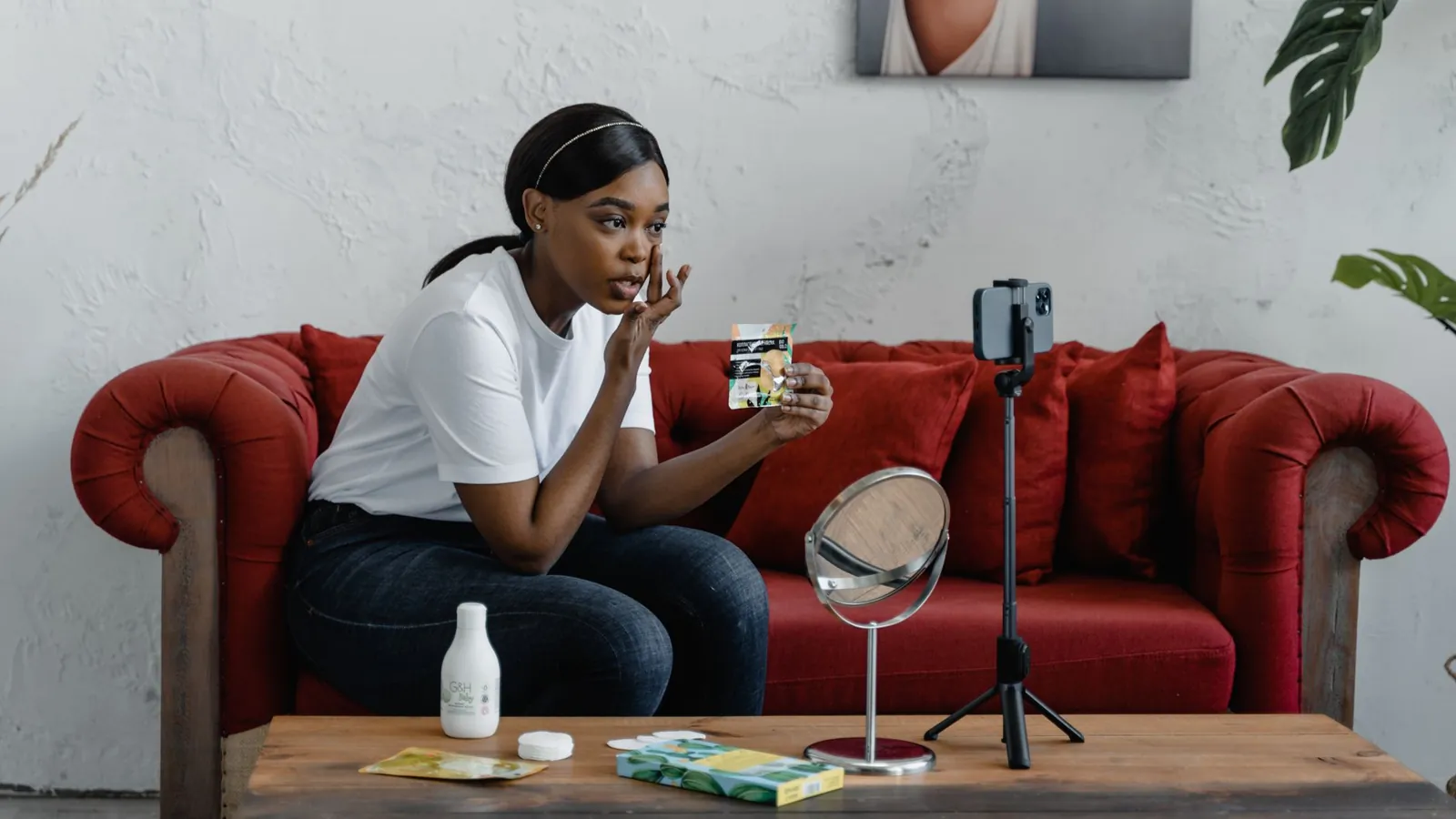
What Is Influencer Marketing? Definition, Types, and How It Works — illustrative featured image
## Influencer marketing is rented distribution, not rented fame Influencer marketing is paying a person with an audience to put your product in front of that audience, and it works the same way any other paid placement works: you buy attention, you measure what it converts, and you cut what it doesn't. That framing matters more than any definition, because most teams still treat it as a brand-awareness line item when it is really a distribution channel with a CAC attached. Here is the uncomfortable part. Understanding how [content marketing](/blog/social-media-trends-2026-what-s-hot-and-what-s-not-for-b2b) works (earning attention through assets you own and keep) and understanding influencer marketing (renting attention you lose the moment the post stops being promoted) are two different disciplines. Teams that blur them end up with a folder of nice-looking creator posts and no idea whether any of it moved pipeline. This piece is a decision guide, not a glossary. If you are a founder or marketing lead in India, MENA or SEA weighing a creator program against your other channels, read the cost tables before the definitions. ## How to define influencer marketing without the fluff Strip the industry language and you get three variables: audience access, trust transfer, and a measurable action. Miss any one and you are just doing sponsorship. - **Audience access:** the creator reaches people you cannot reach efficiently through search or [paid social](/blog/2026-social-media-rules-3-trends-marketers-need-to-win). - **Trust transfer:** their recommendation carries weight your brand account does not have. - **Measurable action:** a link, a code, a landing page, a tracked checkout. No tracking, no channel. What is influencer marketing in digital marketing terms? It is a [paid media](/blog/why-google-ads-costs-so-much-and-how-to-make-it-work) line, sitting next to programmatic and paid search, with a creative layer bolted on. Budget it that way and you will make better decisions than 80 percent of the market. ## The types of influencers (and what each actually costs) What is influencer marketing without knowing who you are buying? Here is the working taxonomy for B2B and considered-purchase categories. | Tier | Followers | Typical cost per post (USD) | Realistic use | |---|---|---|---| | Nano | 1K to 10K | $50 to $300 | Local, high-trust, cheap testing | | Micro | 10K to 100K | $300 to $2,500 | Niche verticals, best ROAS band | | Macro | 100K to 1M | $2,500 to $15,000 | Reach plays, launches | | Mega / celebrity | 1M+ | $15,000 to $250,000+ | Brand campaigns only, rarely direct response | Two tiers are missing from most lists. **B2B practitioner creators** (consultants, operators, analysts with 5K to 50K followers on LinkedIn or YouTube) often outperform everyone above on cost per qualified lead. And **employee creators**, your own team posting to their networks, cost nothing but coordination and frequently beat paid placements on CTR. For India, MENA and SEA specifically: micro-tier rates run 30 to 50 percent below US benchmarks, but you pay a premium for creators who can produce in English and Arabic or Bahasa simultaneously. Budget $400 to $1,200 per micro placement in Dubai, $150 to $600 in Jakarta or Mumbai for equivalent reach. ## How it works in a campaign, with real numbers Say you sell a $99 per month SaaS tool. Target CAC is $300, LTV is $1,800 over 18 months. You have $12,000 to test. You sign eight micro creators at $800 each ($6,400), keep $3,600 for paid amplification of the best two posts, and $2,000 for landing page and tracking setup. Each creator gets a unique UTM link and a discount code. Results after 30 days, typical for a well-run first test: - 340,000 total impressions - 4,100 landing page visits (1.2 percent CTR, decent for creator content) - 190 trials started (4.6 percent visit-to-trial) - 22 paid conversions (11.6 percent trial-to-paid) That is 22 customers at $12,000 spend, or $545 CAC. Above target. But two of the eight creators drove 15 of the 22 conversions. Cut the other six, reallocate $4,800 to the winners, and your blended CAC on round two lands near $240. That is how the channel actually gets built, in rounds, not campaigns. ## Where it breaks Three failure modes account for most wasted creator budget. 1. **No unique tracking.** If every creator uses the same link, you have bought impressions, not data. 2. **Briefing for vibes.** "Make it authentic" produces content that converts nobody. Give creators three hooks, two proof points, one CTA, and let them write the rest. 3. **Optimising for follower count.** A 400K-follower lifestyle creator in a B2B category will underperform a 12K-follower ops consultant every single time. ## What we recommend Our take, and we will be specific. For most B2B and considered-purchase teams in India, MENA and SEA, start with **B2B practitioner creators on LinkedIn and YouTube**, not Instagram. Run a $5,000 to $8,000 pilot with six to ten micro creators, each on a unique link, over 45 days. Do not scale until you have per-creator CAC. If you need reach fast and have brand budget to burn, **macro creators on Instagram or TikTok** work, but treat it as awareness spend with a separate measurement model. Do not judge it on CAC. For tooling, **Modash** and **CreatorIQ** handle discovery and vetting well for this region. **SparkToro** is cheaper and better for finding where your audience actually listens. For attribution, a plain UTM plus your existing analytics beats most influencer-specific platforms, which tend to overstate results. What should you hire an agency for? Creator sourcing, contract and payment logistics across multiple currencies, and regional compliance. What should you keep in-house? Briefing, offer design, and the landing page. Those three determine whether the channel works, and no agency cares about your margin as much as you do. ## What to do this week Pick one product with a clear conversion event. Set a target CAC. Allocate $5,000 to $8,000 for a 45-day pilot. Find eight micro creators using SparkToro or Modash, give each a unique link and code, and brief them with three hooks and one CTA. At day 45, rank creators by CAC, not by engagement. Double down on the top two, drop the rest, and only then write a bigger budget. If you cannot name your target CAC today, you are not ready for influencer marketing. Fix that first. It is a one-afternoon exercise and it saves you five figures. ## FAQ ### How much should a first influencer marketing pilot cost? Between $5,000 and $8,000 for a 45-day test in India, MENA or SEA, covering six to ten micro creators plus tracking setup. Anything under $3,000 rarely produces enough data to make a decision. ### Is influencer marketing worth it for B2B? Yes, if you use practitioner creators rather than lifestyle accounts. A consultant with 15,000 engaged LinkedIn followers typically delivers a lower cost per qualified lead than paid search in competitive categories. ### How do I measure influencer marketing ROI? Track per-creator CAC using unique UTM links and codes, not platform-reported engagement. Compare that CAC against your target and against your next-best channel. Engagement rate is a diagnostic, never a success metric.

Frequently asked questions

How much should a first influencer marketing pilot cost?

Between $5,000 and $8,000 for a 45-day test in India, MENA or SEA, covering six to ten micro creators plus tracking setup. Anything under $3,000 rarely produces enough data to make a decision.

Is influencer marketing worth it for B2B?

Yes, if you use practitioner creators rather than lifestyle accounts. A consultant with 15,000 engaged LinkedIn followers typically delivers a lower cost per qualified lead than paid search in competitive categories.

How do I measure influencer marketing ROI?

Track per-creator CAC using unique UTM links and codes, not platform-reported engagement. Compare that CAC against your target and against your next-best channel. Engagement rate is a diagnostic, never a success metric.