DGTG logo DGTG

Digital Marketing Trends 2026: What Brands Must Know

The 2026 digital marketing trends that actually move budgets, plus a practical playbook for founders and CMOs on what to hire out and what to keep in-house.
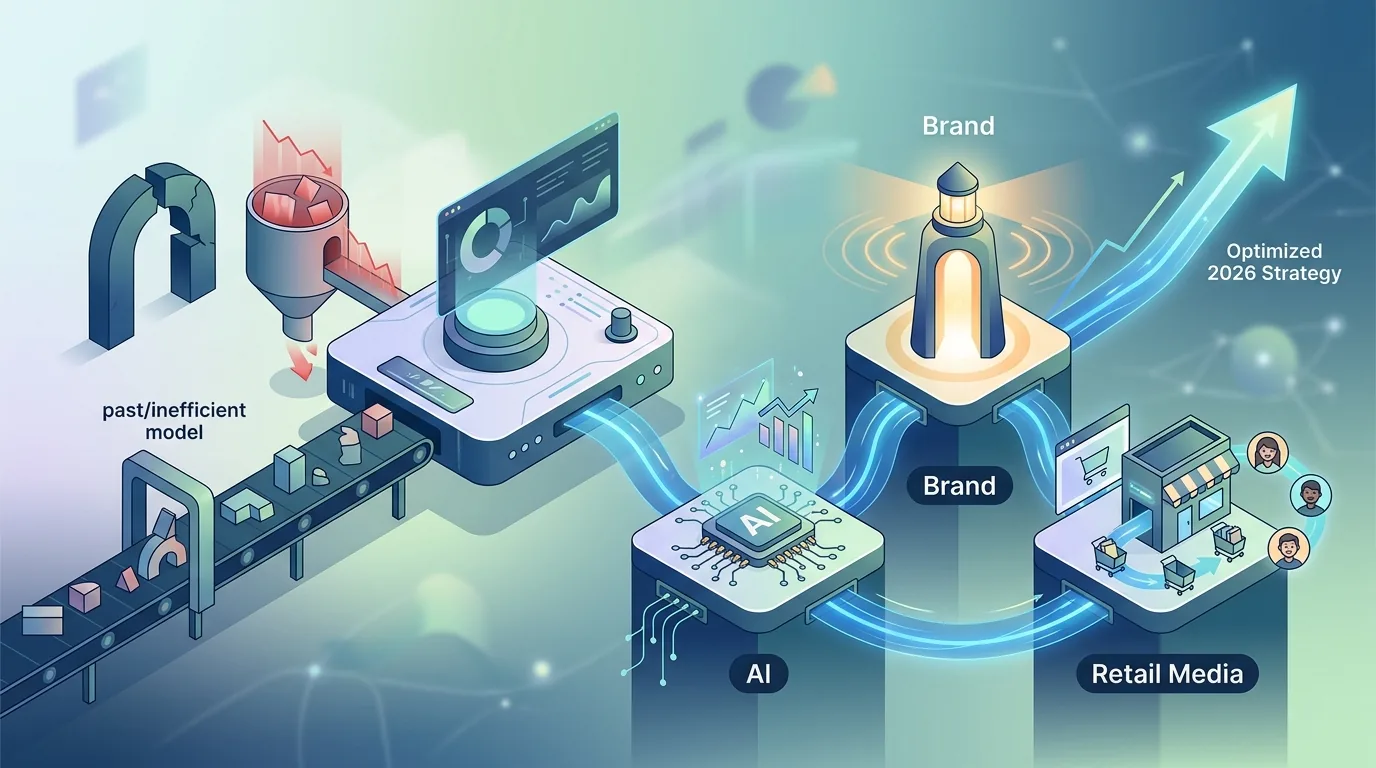
Digital Marketing Trends 2026: What Brands Must Know — illustrative featured image
A CMO I know spent the first quarter of last year rebuilding her team's attribution stack. Clean dashboards, server-side tracking, the works. By June she could tell you the exact CAC of every campaign, every channel, every creative variant. By September she admitted the number she trusted most was still the one her CFO calculated from bank statements. Better measurement did not fix a broken growth model. It just made the losses legible faster. That story shapes how we read the 2026 trend cycle. [FIRST & 42's latest roundup](/dgtg/blog/9-marketing-trends-for-2026-a-buyer-s-guide-for-founders-and-cmos) covers the usual territory, AI everywhere, retail media's continued rise, the slow death of third-party cookies, but the through-line that matters for B2B operators is narrower. The tools got better. The math got harder. Brands that win the next eighteen months will be the ones that treat marketing as a capital allocation problem, not a content problem. Here is what we think actually changes, and what to do about it. ## The measurement arms race hits diminishing returns For three years, the pitch has been the same: fix your data, and performance will follow. That was true when most teams were flying blind. It is less true now. The median B2B SaaS company we work with tracks somewhere between 40 and 60 percent of its funnel with reasonable confidence. Pushing that to 80 percent costs real money and rarely moves ROAS by more than a few points. The better play in 2026 is triangulation. Pick three numbers you trust, keep them stable, and stop re-litigating them every quarter. - Blended CAC from finance, not from the ad platform - Pipeline velocity (days from first touch to qualified opportunity) - Contribution margin per channel, reviewed monthly Everything else is diagnostic. Useful when something breaks, dangerous when it becomes the scoreboard. ### What this means for agency vs. in-house Attribution plumbing is a good candidate for outside help. It is project-shaped, it has a clear deliverable, and it does not require tribal knowledge of your product. Ongoing channel strategy is not. If you outsource the interpretation of your own funnel, you will spend 2026 reacting to whatever the agency's dashboard happens to highlight. ## AI moves from novelty to line item Every trend piece this year mentions AI. Most of them miss the actual shift. Through 2024 and 2025, AI was a budget line under "experimentation." In 2026 it becomes a line item with a target attached, the same way paid search did in 2008. We are seeing three distinct uses, and they warrant different treatment: | Use case | Where it belongs | Typical payback | |---|---|---| | Creative production at volume | In-house with tooling | 1 to 2 quarters | | Lead scoring and routing | In-house, tied to CRM | 2 to 3 quarters | | Content localization and SEO at scale | Agency or specialist partner | 1 quarter | The trap is treating these as one initiative. They are not. Creative volume is a workflow problem. Lead scoring is a data problem. Localization is a language and market problem. Bundling them into a single "AI program" is how you end up with a Slack channel, a Figma file, and no shipped work. ## Brand marketing stops being a cost center Here is the number that should worry every performance-first operator: in our own client audits, branded search volume is the single best leading indicator of pipeline six months out. Better than MQL counts. Better than website sessions. Better than demo requests. That has been true for a while. What changes in 2026 is that CFOs are starting to believe it. We have watched three mid-market companies this year get brand budgets approved by pointing at branded search trends correlated against closed-won revenue, not by arguing about "long-term equity." If you want brand money, bring a chart that ties it to cash. A working [brand marketing strategy for 2026](/dgtg/blog/9-marketing-trends-for-2026-a-buyer-s-guide-for-founders-and-cmos) looks less like a campaign and more like a system: - One durable point of view, repeated for at least four quarters - Consistent visual and verbal identity across paid, organic, and sales collateral - A named executive who owns the narrative, not a committee The brands doing this well are not spending more. They are spending more consistently. The ones that flip brand on for a quarter and off for two are burning money and calling it awareness. ## Retail media and the new walled gardens Retail media is now the third-largest digital ad channel globally, behind search and social, and it is still growing double digits. For consumer brands, this is the story of the year. For B2B, it is a warning about what comes next. The pattern is familiar. A channel gets measurable, gets crowded, gets expensive, and then gets consolidated by whoever owns the transaction data. Retail media is at stage three. B2B marketplaces, industry-specific platforms, and vertical SaaS ecosystems are at stage one. If you sell through a marketplace or a partner ecosystem, 2026 is the year to start building first-party relationships with the buyers you meet there, before the platform decides it owns them. ## Our take: what we would actually do If we were running growth at a $10M to $100M ARR company right now, here is the short list. **Hire for measurement once, then stop.** Bring in a specialist to build the stack, document it, and hand it off. Expect to pay $30K to $80K for a real engagement. Do not sign a retainer for ongoing attribution work. **Run AI creative in-house.** Tools like [Jasper and Copy.ai](/tech/blog/gpt-6-astra-is-it-worth-upgrading-a-practical-guide-for-power-users) are fine for drafts, but the interesting work is happening in workflows, not single tools. A designer with Midjourney, Figma, and a decent prompt library will outproduce a junior team of five. **Keep SEO and localization with a partner.** This is the one area where outside help still clearly wins. The market knowledge and the language work are hard to build internally, and the payback is fast enough to justify the spend. **Protect brand budget like it is payroll.** Cut it last, not first. The companies that pulled brand spend in 2023 are still paying for it in longer sales cycles and higher CAC. **Test one emerging channel per quarter.** Not five. One. Give it a real budget and a real deadline. Kill it or scale it. ## FAQ ### Which digital marketing trends 2026 will actually change budgets? AI workflow adoption and retail media consolidation. Both are already moving money, not just attention. Everything else on most trend lists is a continuation of something that started in 2024. ### How should a small team prioritize emerging marketing trends? Pick the one that touches your highest-cost bottleneck. If CAC is the problem, fix measurement and creative volume. If sales cycles are the problem, invest in brand and content. Do not chase trends that do not map to a number you are trying to move. ### Is brand marketing strategy 2026 worth the spend for B2B? Yes, if you can tie it to branded search and pipeline. No, if it lives in a deck and never touches the funnel. The bar for brand investment has gone up. The payoff for clearing it has too.

Frequently asked questions

What this means for agency vs. in-house Attribution plumbing is a good candidate for outside help. It is project-shaped, it has a clear deliverable, and it does not require tribal knowledge of your p

AI workflow adoption and retail media consolidation. Both are already moving money, not just attention. Everything else on most trend lists is a continuation of something that started in 2024.

How should a small team prioritize emerging marketing trends?

Pick the one that touches your highest-cost bottleneck. If CAC is the problem, fix measurement and creative volume. If sales cycles are the problem, invest in brand and content. Do not chase trends that do not map to a number you are trying to move.

Is brand marketing strategy 2026 worth the spend for B2B?

Yes, if you can tie it to branded search and pipeline. No, if it lives in a deck and never touches the funnel. The bar for brand investment has gone up. The payoff for clearing it has too.