DGTG logo DGTG

Social Media Trends 2026: What's Hot for B2B Brands

Discover the social media trends that matter for B2B and SaaS brands in 2026. Learn what to embrace and what to cut for better ROI. Read the full analysis now.
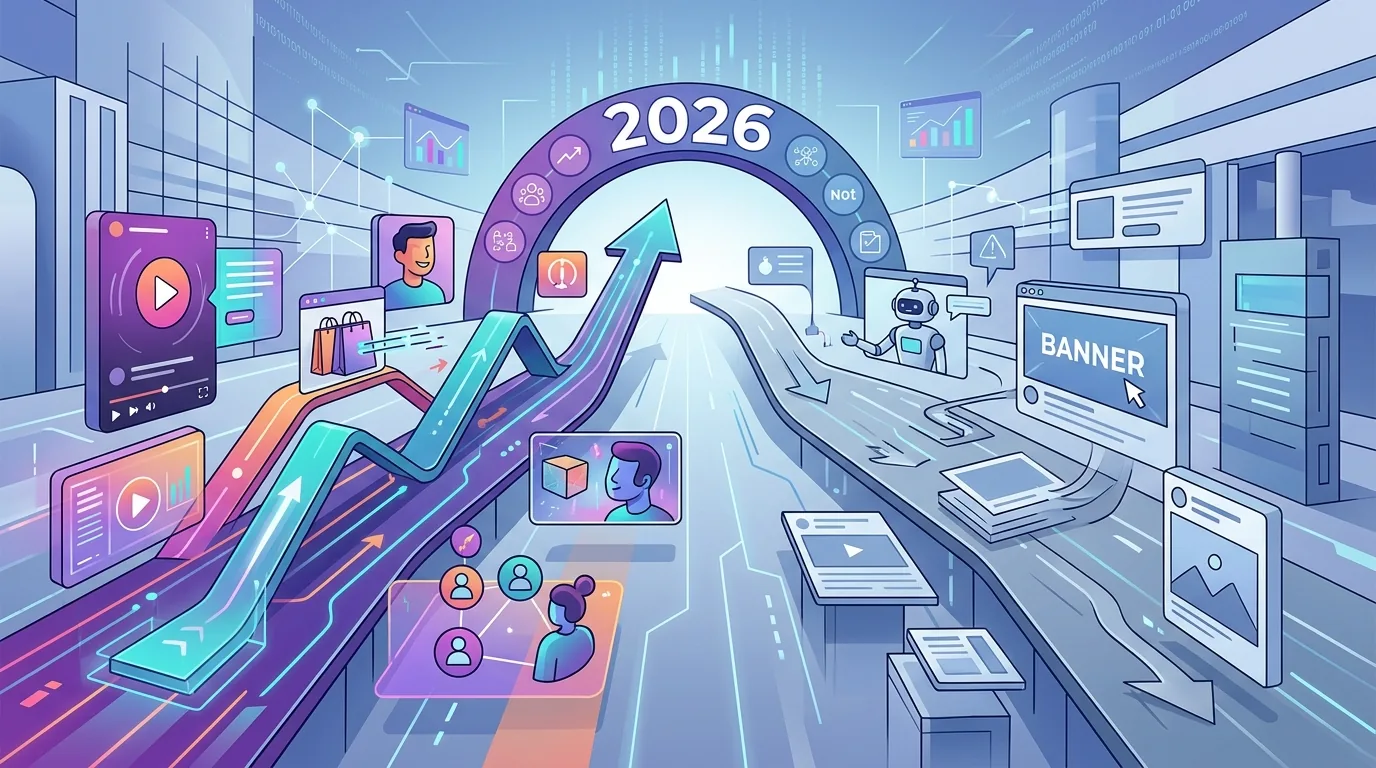
Social Media Trends 2026: What's Hot and What's Not for Brands — illustrative featured image
Every January, the same ritual plays out in marketing Slack channels. Someone shares a listicle titled “10 Social Media Trends That Will Define 2026,” and for the next hour, the team debates whether “micro-communities” are actually a thing or just a rebrand of “niche audiences.” By February, most of those trends are dead, replaced by a new panic about algorithm changes. Here is the reality for B2B and SaaS brands: most trend reports are written for consumer brands selling hoodies or energy drinks. They obsess over ephemeral video styles and creator gimmicks. Your buyers do not care about that noise. They care about reducing CAC, shortening sales cycles, and proving ROI to their CFOs. So let’s cut through the chatter. Based on platform data, client campaign results, and the patterns emerging from early 2026 ad platforms, here is what actually matters for your social media marketing strategy this year, and what you should quietly drop. ## The Shift from Broadcast to Utility The biggest structural change is not a new feature. It is a change in buyer behavior. Decision-makers are exhausted by content that performs for the algorithm but provides zero substance. They have developed a skill for spotting “thought leadership theater” from a mile away. In 2026, the winning B2B social media trends revolve around utility. Content that answers a specific question, solves a documented pain point, or provides a template that saves someone three hours of work. This is not a soft trend. It is measurable. We have seen LinkedIn posts offering a simple ROI calculator spreadsheet generate more qualified demo requests than a month of polished brand videos. The practical implication for your social media marketing strategy: audit your content calendar. If a piece does not pass the “so what” test for a busy VP, cut it. Replace it with asset-driven content. White papers repurposed into carousels. Customer support tickets turned into “how we fixed this” case studies. Product changelogs translated into business outcomes. ### The Rise of the “Dark Social” Funnel Most social media trends reports miss the fact that a massive portion of B2B sharing happens in private channels. Slack groups, WhatsApp threads, and direct messages. Buyers share links with colleagues before they ever comment publicly. This changes how you measure success. Public engagement metrics (likes, comments, shares) are increasingly vanity metrics. The real signal is link clicks with high dwell time and the subsequent traffic to your site that arrives with no UTM source. That is dark social. For agencies and in-house teams, this means two things. First, stop optimizing for public conversation starters. Optimize for content that is screenshot-worthy or link-worthy for a private group. Second, build tracking that captures direct traffic and associates it with recent content exposure. If you cannot see this path, you are flying blind. ## What Is Actually Hot in 2026 Let’s get specific. Here is the shortlist of B2B social media trends that deserve your budget and attention. - **Search-optimized social content:** YouTube and LinkedIn are now search engines for B2B buyers. Content designed to rank for “how to reduce churn” or “best onboarding software” outperforms content designed for a feed. Treat your social captions and video titles like SEO meta data. This aligns with the broader [2026 digital marketing trends](/dgtg/blog/2026-digital-marketing-trends-how-ai-and-search-shape-agency-strategies) shaping agency strategies this year. - **Long-form video for consideration:** Short clips build awareness. But for complex SaaS products, 10 to 20 minute screen-share walkthroughs or recorded webinars are driving the highest intent traffic. Post them natively on YouTube and LinkedIn, not just behind a gated form. - **Executive thought leadership with receipts:** Posting opinions is cheap. Posting opinions backed by proprietary data, customer survey results, or campaign breakdowns is rare and valuable. Executives who share “here is what our data from 500 customers showed” outperform those sharing motivational quotes. - **Community-led support on social:** Using X or LinkedIn as a public help desk. Buyers watch how you handle complaints and questions. A visible, fast response loop builds more trust than any ad campaign. ## What Is Not Hot (And Should Be Cut) Now the uncomfortable part. Here is what we recommend removing from your 2026 plan, despite the hype. - **Short-form vertical video as a primary strategy:** Reels and TikTok-style content still work for brand awareness, but the ROI for B2B is abysmal when it is your main play. The production cost per useful video is too high, and the conversion path is too long. Use it sparingly for culture content, not for lead generation. - **AI-generated generic carousels:** The market is flooded with “5 tips for better email marketing” slides created by [ChatGPT](https://chat.openai.com/) in thirty seconds. Audiences can smell it. If you use AI, use it for research and drafting, then add a layer of specific, non-public insight that a model cannot know. For a deeper look at how AI is reshaping the landscape, check out our analysis of [AI marketing trends](/dgtg/blog/ai-marketing-trends-for-2026-how-to-stay-ahead-for-your-clients) for 2026. - **Engagement baiting:** Asking “what did we miss?” or “agree?” in every post is a dead strategy. Platforms are deprioritizing it, and your audience is numb to it. It also signals desperation. ## Platform-Specific Realities for 2026 Not all platforms deserve equal treatment. Here is our pragmatic breakdown for a global B2B audience. ### LinkedIn: The Workhorse LinkedIn remains the core channel for most B2B social media trends, but the algorithm has shifted toward dwell time and save rates. Posts that keep people reading for over a minute get disproportionate reach. This favors text-based storytelling and document carousels over quick-hit updates. The agency takeaway: hire a writer who understands narrative structure, not just a social media manager who knows how to schedule posts. The gap between a well-told case study and a corporate press release is the difference between organic reach and paid promotion. ### YouTube: The Overlooked Asset Most B2B brands treat YouTube as a video hosting site. That is a mistake. It is the second largest search engine and a critical part of the consideration phase. In 2026, we are seeing clients shift ad spend from display networks to YouTube Search campaigns targeting competitor brand terms and solution-based queries. The content strategy is simple: answer the questions your sales team gets every week. Film a senior team member answering them on camera. No fancy editing. Consistency beats production value here. ### X (formerly Twitter): The Utility Channel X has become less relevant for broad reach but remains essential for real-time customer service and technical discussions. For SaaS companies with a developer or IT audience, X is still where the conversations happen. For general business software, it is a low priority. ## What We Recommend: Our Take If you are planning your social media marketing strategy for the rest of the year, here are our specific picks, and we are not shy about naming names. - **For content creation:** Use a tool like Jasper or Copy.ai for first drafts, but pair it with a human editor who has domain expertise. The winning formula is AI efficiency plus human pattern recognition. If you are weighing the broader trade-offs, our guide to [open-source AI vs. proprietary](/tech/blog/open-source-ai-vs-proprietary-which-is-right-for-your-business) models can help you choose the right foundation for your workflow. - **For scheduling and listening:** Sprout Social or Brandwatch are still the gold standard for enterprise. For startups, Buffer’s new analytics suite is surprisingly good for measuring dark social referral spikes. - **For short-form video:** If you must do it, use OpusClip to repurpose your long-form webinars. Do not create original short-form content from scratch. The ROI is not there. - **For community management:** Hire a dedicated person, do not outsource this to an agency. The best community managers need deep product knowledge and the authority to escalate issues internally. That is an in-house role. The biggest agency-versus-in-house decision point this year is around strategy versus execution. Agencies are still great for high-level planning, competitive analysis, and paid social management. But the day-to-day community engagement and the authentic voice that builds trust? That needs to live inside your company, close to the product team. ## The Metrics That Matter Now Stop reporting on impressions and follower growth. In 2026, your board and your CFO want to see the following: - **Assisted conversions:** How many pipeline opportunities touched a social channel before converting. - **Cost per qualified lead:** Social traffic that fills out a demo request form versus a newsletter signup. - **Share of search:** How your brand ranks for key solution terms on LinkedIn and YouTube. - **Sales cycle acceleration:** Are prospects who engage with your social content moving through the funnel faster than those who do not? If your current social media marketing strategy cannot tie back to these numbers, you are not doing marketing. You are doing broadcasting. ## FAQ **How often should a B2B brand post on social media in 2026?** Quality over frequency is the rule. Three to four high-utility posts per week on LinkedIn beat daily low-value posting. For YouTube, one solid long-form video per week is sufficient. The algorithm rewards dwell time and saves, not volume. **Is paid social still worth it for B2B?** Yes, but only for retargeting and search-based campaigns. Boosting organic posts is largely a waste of money. Put your budget into LinkedIn Ads for account-based marketing and YouTube Search for intent capture. Measure everything against CAC, not CTR. **Should we use AI to write all our social content?** No. Use AI for outlines, research summaries, and drafting variations. The final voice must be human. Your buyers are reading content to decide if they trust you with a six-figure contract. A generic AI voice will not close that deal.

Frequently asked questions

How often should a B2B brand post on social media in 2026?

Quality over frequency is the rule. Three to four high-utility posts per week on LinkedIn beat daily low-value posting. For YouTube, one solid long-form video per week is sufficient. The algorithm rewards dwell time and saves, not volume.

Is paid social still worth it for B2B?

Yes, but only for retargeting and search-based campaigns. Boosting organic posts is largely a waste of money. Put your budget into LinkedIn Ads for account-based marketing and YouTube Search for intent capture. Measure everything against CAC, not CTR.

Should we use AI to write all our social content?

No. Use AI for outlines, research summaries, and drafting variations. The final voice must be human. Your buyers are reading content to decide if they trust you with a six-figure contract. A generic AI voice will not close that deal.

The Rise of the “Dark Social” Funnel Most social media trends reports miss the fact that a massive portion of B2B sharing happens in private channels. Slack groups, WhatsApp threads, and direct messa

If your current social media marketing strategy cannot tie back to these numbers, you are not doing marketing. You are doing broadcasting.