DGTG logo DGTG

Google's 2026 Algorithm Updates: What Changed and How to Protect Your Rankings

Google's algorithm updates in 2026 changed rankings. Learn what changed in February, May, and August, and how to protect your rankings with our recovery playbo…
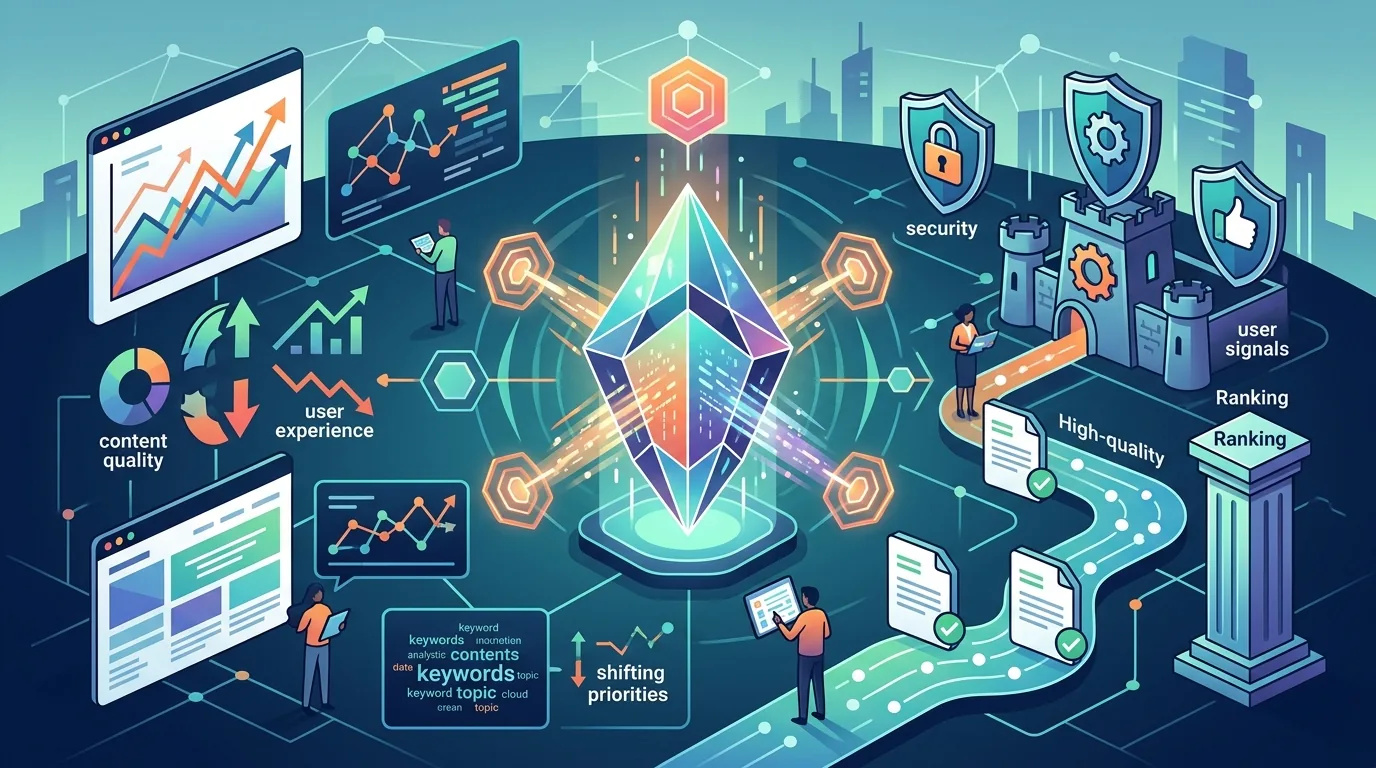
Google's 2026 Algorithm Updates: What Changed and How to Protect Your Rankings — illustrative featured image
The first real signal hit in mid-February. A client in the B2B SaaS space watched their organic demo bookings drop 22% over a single weekend. Their content was solid, their backlink profile was clean, and they hadn't touched a single page. The culprit wasn't a technical fault. It was the first major core update of 2026, and it redistributed authority in ways that caught many established domains off guard. Google rolled out three significant algorithm updates this year, and if you are just now noticing the impact, you are already behind the recovery curve. Let's break down what actually changed, what it means for your P&L, and the specific steps you can take to stabilize your rankings before Q3. For a broader look at what else is shifting this year, our [2026 Digital Marketing Trends](/dgtg/blog/2026-digital-marketing-trends-how-ai-search-and-social-will-reshape-growth) piece covers the wider landscape. ## The Three Updates That Matter Google does not publish a changelog, but the SEO community has reverse-engineered the patterns from enough ranking volatility data to paint a clear picture. ### 1. The February Core Update (Intent Fulfillment) This was the big one. The update refined how Google evaluates whether a page satisfies the "primary intent" of a query versus merely covering related subtopics. For commercial queries, this meant a shift toward pages that present a clear recommendation or a decisive answer early in the content. What got hit hardest were "hub-and-spoke" pages that tried to rank for everything. A page targeting "best CRM for small business" that spent 1,500 words discussing the history of CRM software before getting to a list of recommendations lost significant ground. Pages that led with a comparison table and a definitive pick saw gains. ### 2. The May Helpful Content Enforcement (Experience Signals) The May update was less about content quality and more about provenance. Google pushed harder on first-party experience. Content written by someone who has clearly used the product or service outranked content assembled from competitor research and spec sheets. For B2B tech, this was brutal for agencies producing generic thought leadership. If your blog post on "supply chain software trends" was written by a generalist writer who interviewed no one and cited no proprietary data, the visibility dropped. Content that included original benchmarks, customer interview quotes, or internal workflow screenshots held steady or improved. ### 3. The August Site Authority Refinement (Link Relevance) The August update targeted link equity. Google deprioritized links from "resource pages" and generic directories that were previously considered standard SEO fodder. Instead, they weighted links from within the body copy of relevant, high-traffic articles and industry-specific newsletters. The practical impact: a backlink from a low-traffic industry blog with a 3% click-through rate now carries more weight than a link from a DA-90 generic business directory. This shift forced a rethink of digital PR strategies. If your link building was outsourced to a firm that only chased high-DA metrics, your authority graph likely took a hit. ## How to Diagnose Your Specific Damage Before you change anything, you need to know which update hit you. Run a segment of your traffic by landing page for the last six months. Look for the date of the drop. Cross-reference that date with the update timeline. If the drop happened in February, your problem is likely content structure and intent mismatch. If it happened in May, you are looking at a credibility gap. If it happened in August, your backlink profile is probably the weak link. ### Quick Diagnostic Checklist - Compare rankings for your "money pages" (service pages, product pages) versus your blog. If the blog tanked but the money pages held, the issue is topical authority, not site health. - Check your Google Search Console for impressions versus clicks. If impressions stayed flat but clicks dropped, your title tags and meta descriptions are no longer compelling enough to earn the click. If impressions dropped, you lost ranking position. - Review your top 20 referring domains. If more than half are directories, listicles, or press release syndications, you are vulnerable to the August update. ## The Recovery Playbook Recovery is not about waiting for the next update. It is about structural changes that align with the new reality. ### Restructure for Decision Velocity For every page that targets a commercial keyword, the answer must be visible within the first 200 words. We are not talking about a paragraph that hints at the answer. We are talking about a direct statement. For example, if you are a marketing agency targeting "best HubSpot migration agency," the first paragraph should say something like: "For most mid-market companies, we recommend a phased migration approach over a full lift-and-shift. Here is why, and here is the exact timeline we use." This feels counterintuitive to marketers who want to build a narrative. But the data from the February update is clear. Pages that front-load the answer and then support it with evidence are winning the featured snippets and the top three positions. ### Audit Your Content for "Ghost Writing" Signals The May update means you need to prove you have skin in the game. Go through your highest-traffic blog posts and look for sections that read like a generic industry report. Replace those sections with specific anecdotes. If you sell a project management tool, do not write a generic paragraph about "improving team collaboration." Write about the time a client in the logistics sector used your tool to cut their weekly status meeting time from 90 minutes to 15. Include the specific workflow. If you do not have these anecdotes, you have two options. You can interview your own client success managers to extract them, or you can hire a specialist writer who can conduct those interviews on your behalf. This is a place where hiring an agency makes sense, because it requires a level of access and synthesis that most in-house content teams lack the bandwidth for. For agencies navigating these shifts, our [2026 playbook for agencies and their clients](/dgtg/blog/2026-digital-marketing-trends-a-playbook-for-agencies-and-their-clients) offers additional tactical guidance. ### Prune the Dead Weight Links For the August update, you need to do a link audit with a focus on relevance, not just authority. Export your backlinks and categorize them by the context of the link. - Links from "Top 10 SaaS Tools" listicles with no descriptive text: low value now. - Links from a newsletter where the author recommended your tool in a paragraph: high value. - Links from a podcast show notes page: moderate value, but only if the podcast is in your niche. Consider using the Google Disavow Tool for the first category, but be careful. Disavowing is permanent. Only disavow links that are clearly spammy or from sites that have been penalized themselves. For the low-value directory links, it is often better to simply ignore them and focus on earning new, contextual links. ## What We Recommend We have tested several recovery strategies across our client portfolio this year. Here is what we are actually deploying, and what we would tell a founder to do in-house versus hiring out. ### In-House: Content Restructuring If you have a competent content lead, the restructuring work for the February update is something you should do internally. It requires deep knowledge of your product and your customers' buying triggers. An external agency will take four to six weeks just to get up to speed on your specific value proposition. You do not have that time. Run a weekend sprint with your product team to define the "one sentence answer" for your top 10 service pages. ### Hire an Agency: Digital PR and Link Earning The August update has made link building a relationship game. You need journalists and newsletter authors to mention you in the context of a story. This requires a media list, pitch templates, and the ability to offer exclusive data. Most in-house marketers do not have the time or the existing relationships to make this work quickly. We have seen strong results using agencies like Siege Media and Fractl for this specific type of contextual link building. They have the editorial contacts and the design resources to create the data visualizations that journalists actually want to embed. Expect to pay a premium, but the cost per high-quality link is often lower than the wasted spend on a DA-chasing link farm. ### Our Take on Tooling For tracking the impact of these updates, we have moved away from generic rank trackers. We are using Semrush's Position Tracking with the "Visibility" metric enabled, combined with nightly exports to Looker Studio. This gives us a daily view of which pages are losing impressions so we can react within 48 hours rather than waiting for a monthly report. For the content credibility audit, we are using a manual process. We read the top 10 performing pages for each of our main keywords and ask one question: "Would a buyer trust this if they knew who wrote it?" If the answer is no, we rewrite it. No tool can do this for you yet. ## The Long Game The 2026 updates are pushing SEO toward a model where brand searches and direct traffic matter more than ever. Google is essentially saying that if you cannot convince a user to type your name into the address bar, you do not deserve the organic traffic for generic terms. This means your SEO strategy for the rest of the year should include a retention email component. You need to convert the one-time organic visitor into a repeat visitor via newsletter. The engagement metrics from that returning traffic signal to Google that your site is a destination, not just a stop on the way to a competitor. Understanding how AI searches are reshaping user behavior is part of this shift, as covered in our piece on [AI searches changing digital marketing](/dgtg/blog/how-ai-searches-are-changing-senior-living-digital-marketing-lessons-for-agencie). Start with a simple exit-intent popup offering a downloadable template or a proprietary benchmark report. The goal is to get that email address. The organic rankings will follow the behavioral data. ## FAQ ### How long does it take to recover from a Google core update? Recovery timelines vary, but most sites that implement structural fixes see stabilization within 8 to 12 weeks. Full recovery to previous traffic levels often takes a full quarter, as Google needs to recrawl and re-evaluate your pages multiple times. If you have not seen any improvement after 90 days, the issue is likely deeper than on-page content. ### Should I pause my SEO efforts during an update rollout? No. Pausing content production or link building during a rollout is a mistake. Google rewards sites that maintain consistent publishing cadence. If you pause for two weeks, you lose momentum in crawling frequency. Instead, slow down on new content and focus your energy on updating existing high-value pages during the rollout window. ### Is guest blogging still effective for link building in 2026? Yes, but only if the guest post is published on a site that has real readership and engagement. Publishing on a site that accepts guest posts but has no comments and low traffic is a waste of time. Focus on contributing to newsletters with a high open rate, as those links are now treated as stronger signals than static blog posts.

Frequently asked questions

1. The February Core Update (Intent Fulfillment) This was the big one. The update refined how Google evaluates whether a page satisfies the "primary intent" of a query versus merely covering related

Recovery timelines vary, but most sites that implement structural fixes see stabilization within 8 to 12 weeks. Full recovery to previous traffic levels often takes a full quarter, as Google needs to recrawl and re-evaluate your pages multiple times. If you have not seen any improvement after 90 days, the issue is likely deeper than on-page content.

Should I pause my SEO efforts during an update rollout?

No. Pausing content production or link building during a rollout is a mistake. Google rewards sites that maintain consistent publishing cadence. If you pause for two weeks, you lose momentum in crawling frequency. Instead, slow down on new content and focus your energy on updating existing high-value pages during the rollout window.

Is guest blogging still effective for link building in 2026?

Yes, but only if the guest post is published on a site that has real readership and engagement. Publishing on a site that accepts guest posts but has no comments and low traffic is a waste of time. Focus on contributing to newsletters with a high open rate, as those links are now treated as stronger signals than static blog posts.